
Canadian Cosmetics Market: Entry Strategy, Regulations & Opportunities for International Brands
- Audrey Calligaro
The Canadian cosmetics market consistently attracts the attention of European brands looking to expand internationally. High purchasing power, consumers open to innovation, sustained demand for value-added products — the signals are encouraging. But the reality on the ground is more complex. This is a mature market, dominated by international players with significant marketing budgets, where positioning mistakes or regulatory non-compliance come at a real cost.
This note provides an honest assessment of the Canadian beauty market: its genuine opportunities, but also the concrete conditions required to succeed.
It draws on an interview with Margarita Sidorova, Director of the Canadian Cosmetic Cluster, Adexia’s partner for supporting international companies entering the Canadian cosmetics market. The data and analysis combine this on-the-ground expertise with the leading industry sources available.
This note covers cosmetics and personal care products for aesthetic or wellness use, excluding therapeutic products subject to pharmaceutical regulations.
1. Size and Structure of the Canadian Cosmetics Market
The Canadian cosmetics market is mature, stable, and resilient — but modest in size on a global scale. Consumption is heavily concentrated in major urban centers: Toronto, Montreal, and Vancouver. It is a polarized market, with premium segments highly dependent on digital marketing on one end, and a volume-driven mass market with intense price pressure on the other — with very little room for vague or mid-range positioning.
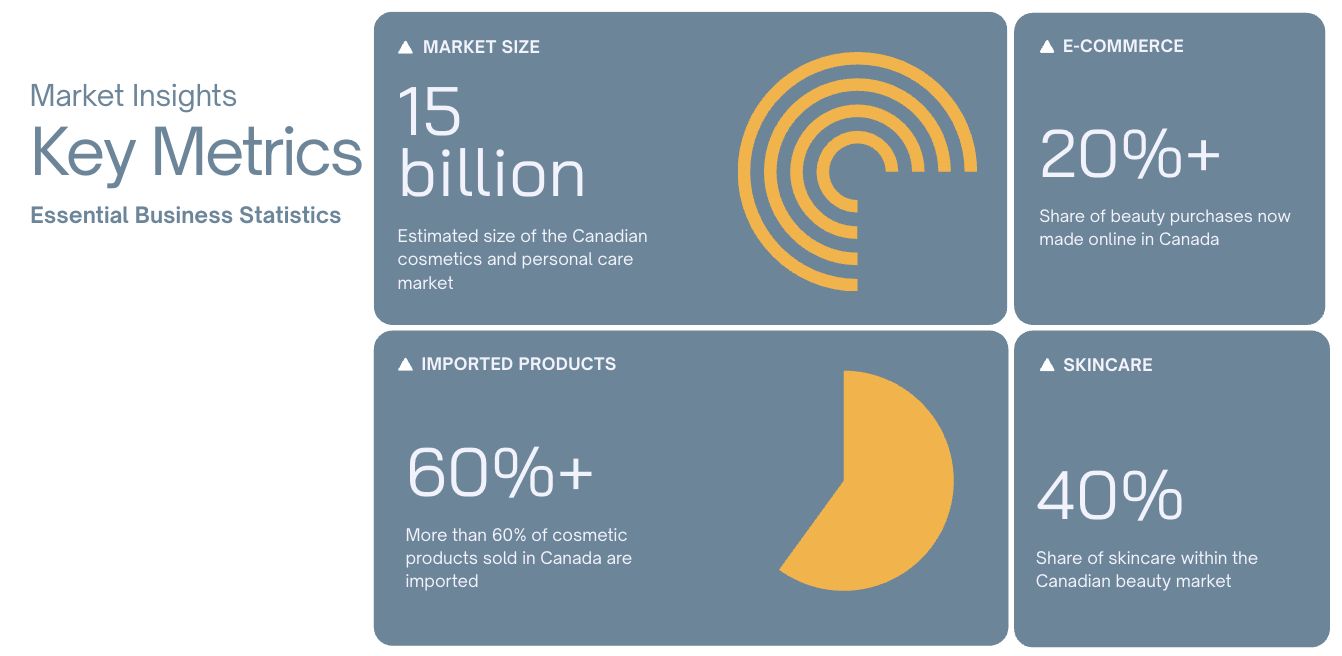
Key market figures:
- Canada ranks as the 11th largest cosmetics market worldwide
- Total market value is estimated at approximately CAD 15 billion across all segments
- Skincare is the most dynamic segment (40% of the market), followed by premium fragrances and beauty tech
- Online sales now account for more than 20% of beauty purchases in Canada
- More than 60% of cosmetics sold in Canada are imported
- European brands benefit from a strong quality perception, particularly in premium and dermo-cosmetic segments
Despite trade tensions with the United States, the sector continues to show positive momentum driven by domestic consumption. There has been a rise in Asian imports (China, India) and the emergence of independent Canadian brands that have filled gaps left by weakened incumbents.
2. Key Segments of the Canadian Beauty Market
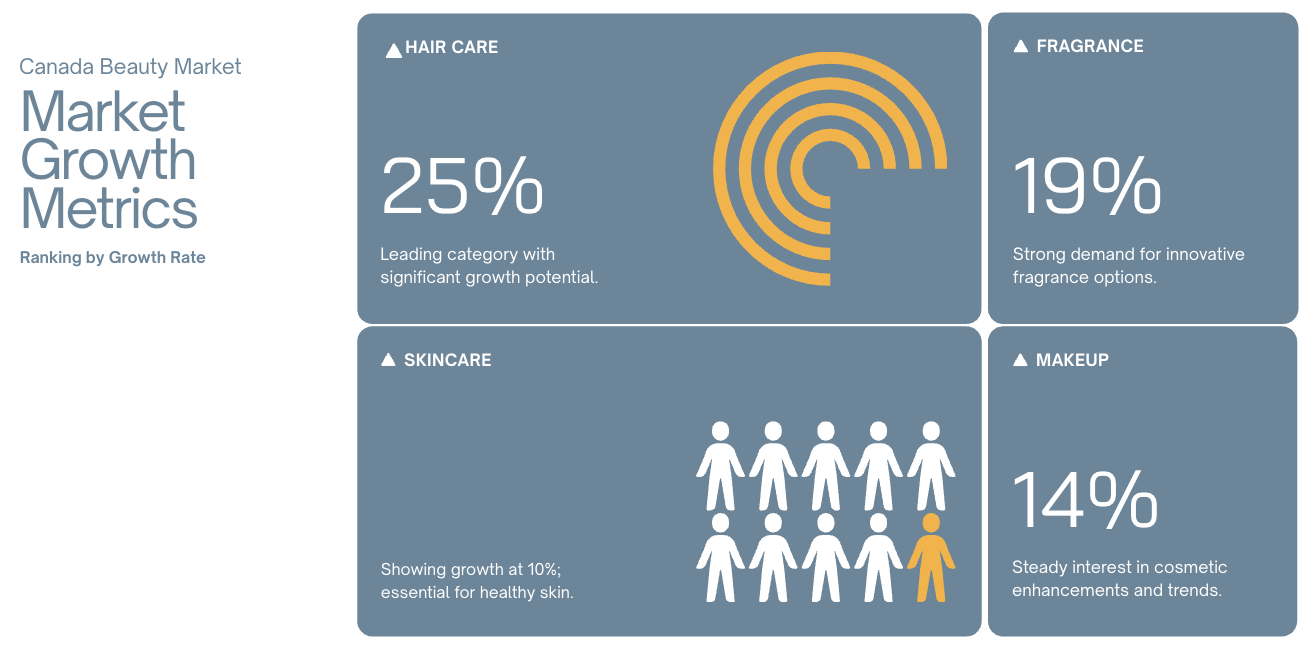
Skincare: The Core Segment
Skincare remains the dominant segment in the Canadian market, with growing demand for products focused on skin health, sensitive skin, and clinically proven efficacy. Dermo-cosmetics retain strong credibility through pharmacy distribution and represent a credible entry point for European brands with solid scientific credentials.
Active & Sports Beauty: High Growth, High Loyalty Potential
Active and sports beauty is one of the most dynamic segments, particularly in British Columbia and urban areas with strong outdoor cultures. What makes it distinctive: regular, often daily consumption. Sunscreen, post-workout skincare, intensive hydration — these products generate rapid stock turnover, more predictable revenue, and significantly higher customer lifetime value (LTV) than more occasional segments like fragrance or makeup.
Marketing messaging should emphasize functionality and real-world use. Vancouver is the most relevant entry market for this segment: strong sports culture, high purchasing power, and proximity to the US.
Beauty Technology & Biotechnology
At-home treatment devices (LED, connected tools, microcurrent devices) are gaining traction. Performance and technological innovation are key purchase drivers for urban, affluent consumers seeking measurable results.
Premium & Niche Fragrances
Premiumization is continuing in urban centers, driven by a search for differentiation and personal identity. A promising segment for European niche houses — provided the distribution strategy is carefully managed (specialized retail, pop-ups, DTC) and local brand activation is prioritized.
Accessible Beauty & Mass Market: The Volume Model
The accessible beauty segment is growing on the back of rising price sensitivity. Distributed through mass retailers (Walmart, Costco), discount chains (Dollarama), and some pharmacies, this model depends on shelf visibility, volume, and rapid stock rotation. Unlike premium brands, digital dependence is lower — physical distribution can sustain volumes. However, this is not a suitable entry point for new foreign brands that do not yet have the logistics and promotional infrastructure in place.
Consumer Trends
Eco-responsible, sustainable, and natural cosmetics are no longer differentiating trends — they are baseline expectations. Today’s Canadian consumer wants effective, accessible products, is more price-conscious than before, and expects clear, engaging communication. On social media, content must be dynamic, entertaining, and consistent — overly technical or clinical messaging consistently underperforms. A social media presence is a market-entry requirement, not an optional lever.
3. Competition: Who Dominates the Canadian Cosmetics Market?
The market is dominated by major international groups (L’Oréal, Estée Lauder, Procter & Gamble, Unilever, Shiseido), firmly established with substantial marketing budgets. The mass market they control is unforgiving for new entrants: demanding listing requirements, compressed margins, frequent promotions.
Against them, independent Canadian brands (Consonant, Rocky Mountain Soap, Attitude, Annabelle) and digitally native international brands are gaining ground, driven by their agility and ability to build engaged communities. Their constraint: a sustained investment in content and digital marketing.
Success in the Canadian market depends less on market opportunity than on the coherence of the market entry model. Before entering, a brand must have defined its price positioning, distribution model, marketing intensity, logistics capacity, and regulatory compliance
4. Cosmetics Distribution Channels in Canada
Access to a channel does not guarantee commercial success. Success depends on alignment between product positioning, marketing strategy, and channel choice. Distribution is heavily concentrated in major urban centers, with more complex logistics in remote regions.
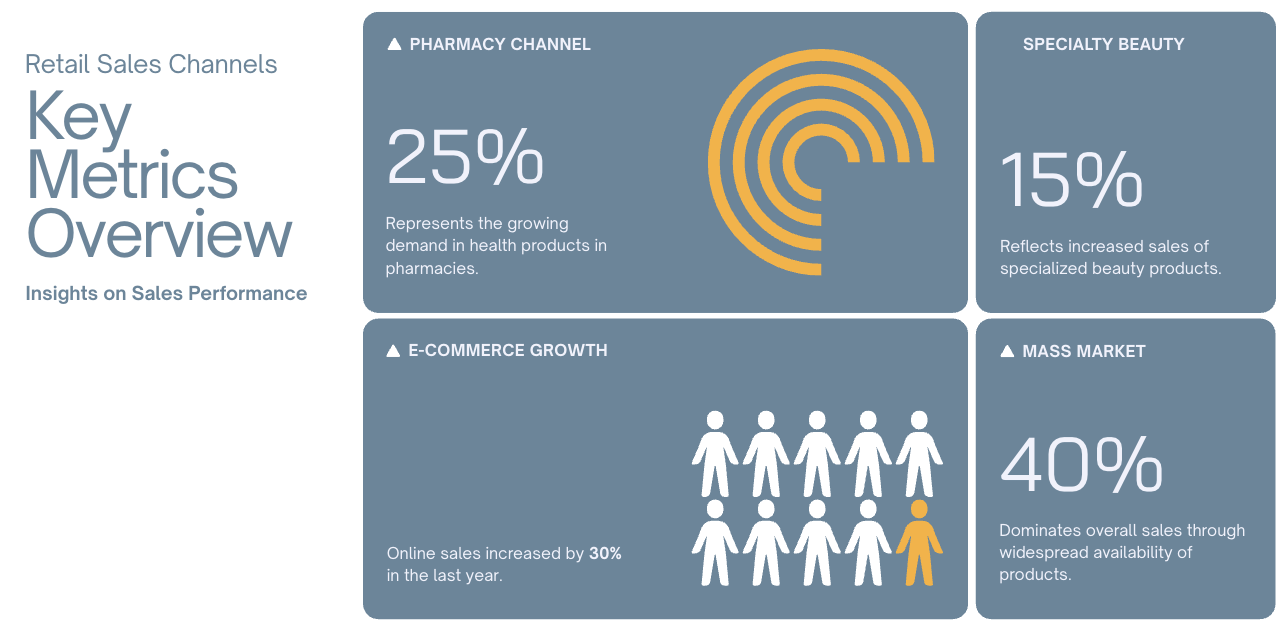
Pharmacies — Strategic Channel for Credibility
Shoppers Drug Mart, Jean Coutu, Pharmaprix, and Rexall are central channels for dermo-cosmetic and science-backed products, as well as nutritional supplements. Securing a listing can require national-level negotiations and significant marketing support.
Specialty Beauty Retail — Visibility and Brand Image
Sephora, Holt Renfrew, and mass-premium retailers are important showcases for premium brands. These networks require a solid marketing strategy and regular activations. Retailers no longer build brands on your behalf — demonstrable traction must come before a listing.
Mass Retail — Volume and Price Pressure
Walmart, Loblaws, Costco, Dollarama: suitable for brands positioned in the accessible segment. Price competitiveness is critical, with high logistical and promotional requirements.
E-commerce & Social Commerce — The Preferred Entry Point
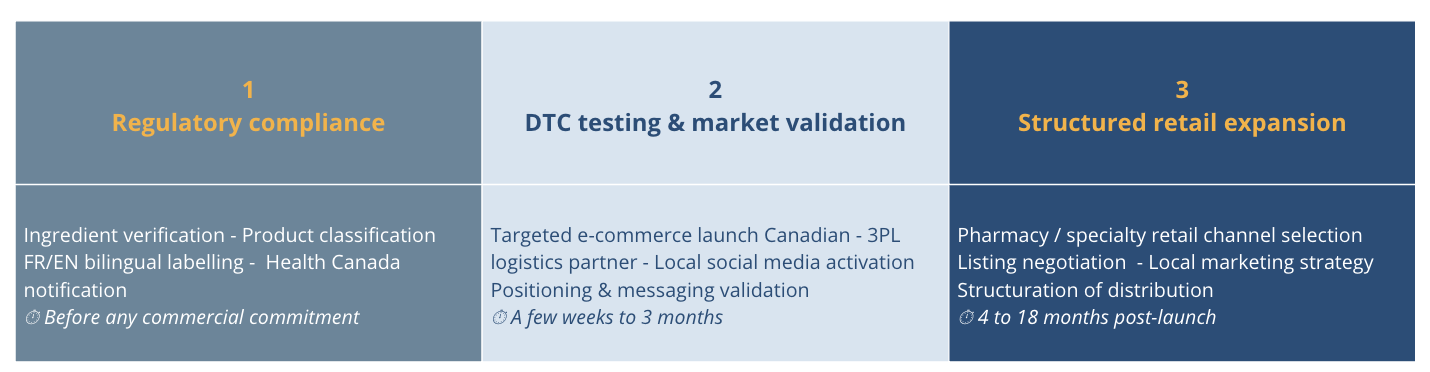
A strategic entry channel for international brands. The standard model: DTC launch, Canadian 3PL, social media activation, traction validation before retail expansion.
Professional Channel — Spas, Aesthetic Clinics, Salons
Particularly relevant for dermo-cosmetics and beauty tech. A favorable context for expert recommendation and premium positioning. Requires adapted training materials, strong scientific support, and structured commercial follow-up.
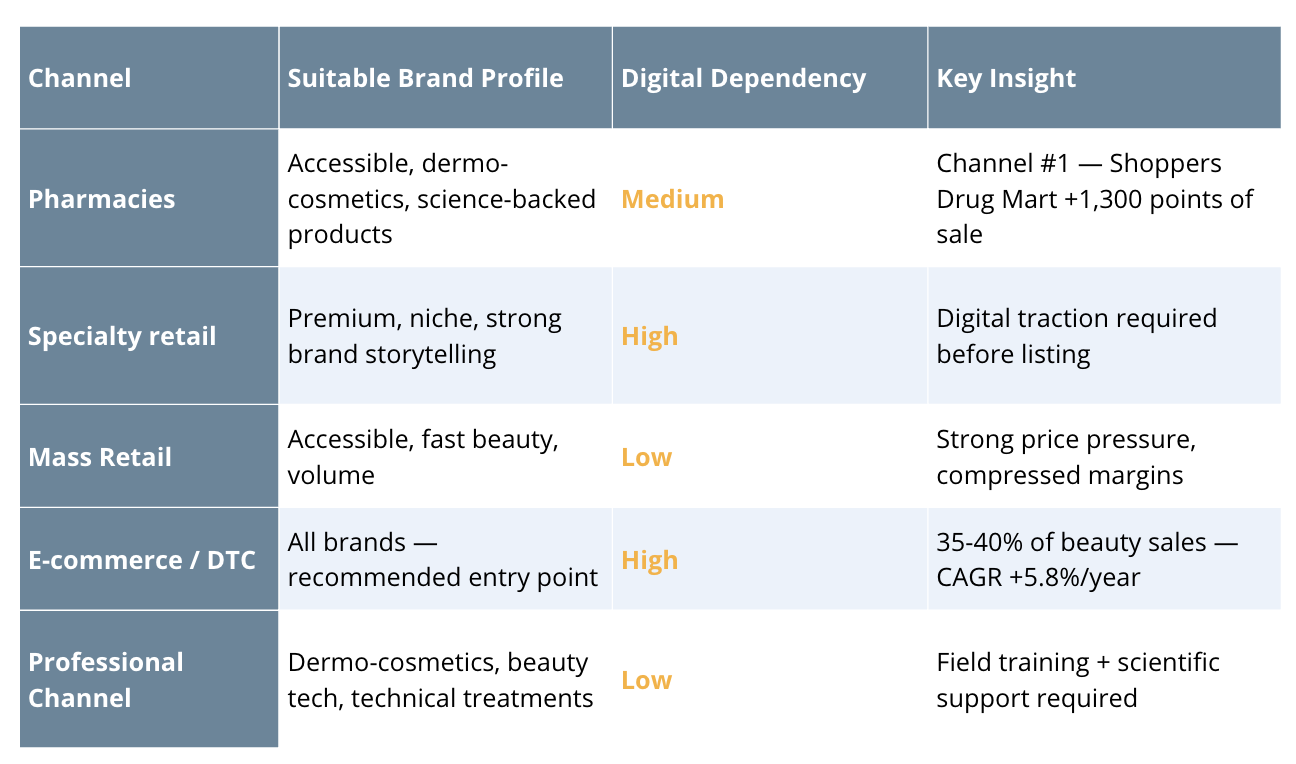
Two common mistakes: seeking a distributor too early before demonstrating traction, and underestimating the marketing investment required after a listing is secured. The Canadian market rewards progressive strategies: digital testing → traction validation → retail expansion.
5. Cosmetics Regulations in Canada: What European Brands Need to Know
Before any product launch, a cosmetic notification must be submitted to Health Canada: full INCI list, contact details of the Canadian responsible party, and product information. The Canadian importer or manufacturer is responsible for compliance. A delayed or missing notification can result in commercial delays and corrective measures.
A critical point: product classification depends largely on marketing claims. A moisturizer is a cosmetic; if it claims to treat acne or stimulate collagen, it moves into a more regulated category. Canadian regulations do not mirror European ones — divergences exist and must be verified on a case-by-case basis. Health Canada also maintains a list of restricted or prohibited substances that must be systematically checked.
Mandatory Bilingual Labelling
French/English bilingualism is mandatory. An approximate translation can create regulatory or commercial issues, particularly in Quebec. Special attention is required for hair growth serums, anti-acne products with strong claims, and any product whose marketing language approaches therapeutic territory.
Common Mistakes Made by European Brands
- Claims that are too medical without regulatory validation
- Incorrect product classification
- Non-compliant labelling or inadequate translation
- Absent or delayed Health Canada notification
These errors can delay a launch, increase costs, or damage credibility. Canadian regulations are not an insurmountable barrier, but they require anticipation and close coordination between marketing and compliance teams.
Key Takeaways for Entering the Canadian Cosmetics Market
- The Canadian cosmetics market is accessible — but it is one of the most competitive in North America. Established players have significant marketing budgets, and visibility cannot be acquired cheaply.
- European brands have a genuine image advantage in premium and dermo-cosmetic segments. This advantage is not sufficient on its own: it must be backed by a coherent distribution strategy and sustained marketing investment.
- The business model must be clearly defined before market entry. Vague positioning or hybrid strategies do not work.
- A rushed entry — without validated traction or regulatory preparation — exposes brands to significant costs that are difficult to absorb. This market is not suitable for every stage of company development.
How Adexia Supports Your Entry into the Canadian Cosmetics Market
While the Canadian cosmetics market presents real opportunities, it remains one of the most demanding for a new foreign entrant. Rigorous local support is not an advantage — it is a condition for success.
Adexia operates an active partnership with the Canadian Cosmetic Cluster, the reference network for the Canadian cosmetics industry, providing privileged access to key sector players and partnership opportunities.
Our primary mission: helping companies objectively assess project feasibility before committing — positioning fit, required investment level, realistic timeline. We then support throughout:
- Positioning analysis and market entry strategy validation (segment, channel, pricing)
- Identification and qualification of distributors, agents, and retail partners
- Introductions to key players in the Canadian cosmetics ecosystem
- Organization of targeted trade missions in Toronto, Montreal, or Vancouver
- Regulatory scoping (Health Canada notification, labelling, claims classification)
Our goal: building a durable and profitable presence in the Canadian cosmetics market — reducing operational risk and accelerating time to market.

For a foreign company looking to grow its business in Canada, building a local presence ...

Alcohol trade regulation in Canada falls under provincial jurisdiction. Each province controls importation, distribution and, ...

SMEs and Mid-Sized Companies: Have You Considered External Growth to Accelerate Your Expansion in Canada ...

Canada is Opening the Door to Strategic Investment in Energy, Infrastructure and Critical Resources Thanks ...

In today’s global landscape, where medical innovation and access to strategic markets are critical challenges, ...

Canadian engineering is entering a pivotal decade: rarely has the country mobilized so much public ...