
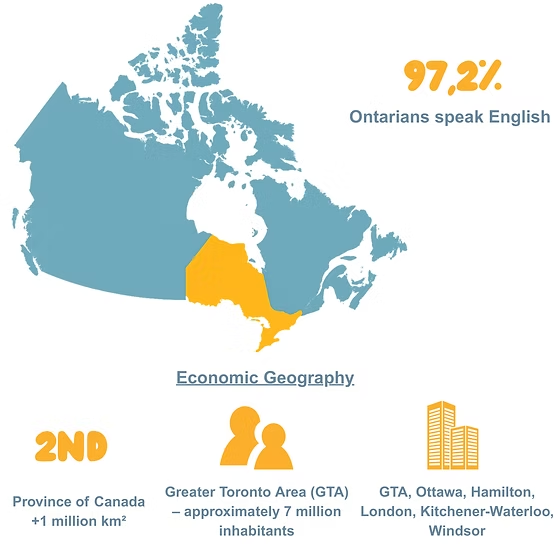
Ontario enjoys an exceptional strategic geographic position that makes it a vital hub for logistics and trade. With privileged access through its Great Lakes ports and the St. Lawrence Seaway, the province enables efficient movement of goods to the rest of Canada, the Atlantic Ocean, and the United States.
In addition, Ontario’s extensive highway and rail networks provide world-class connectivity, ensuring fast access to both domestic and international markets. Every day, more than CAD 400 million in goods cross the Ambassador Bridge, linking Windsor (Ontario) with Detroit (Michigan). From Toronto, companies can reach over 194 million consumers within a single day’s drive, reinforcing Ontario’s role as a key hub for transportation, distribution, and North American trade.
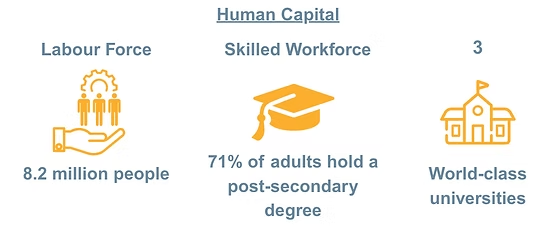
Ontario boasts an exceptional pool of human capital that fuels its economic growth. The province is home to:
This unique mix of talent, education, and a dynamic tech ecosystem makes Ontario a prime destination for businesses seeking innovation and growth in high-value sectors.
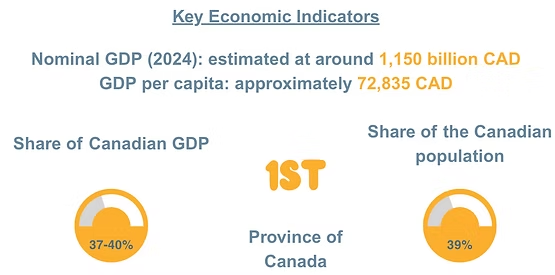
Ontario’s main economic indicators highlight the vitality of its economy. As Canada’s largest economic powerhouse, Ontario recorded an estimated nominal GDP of CAD 1.15 trillion in 2024, accounting for nearly 37–40% of the national GDP.
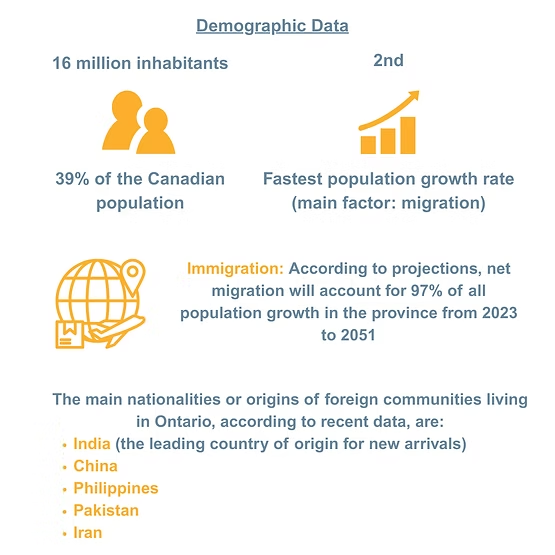
The province is also home to about 15.8 million residents, representing 39% of Canada’s total population, further confirming its position as both a demographic and economic engine for the country.
Ontario is a top destination for foreign direct investment (FDI), driven by:
These FDI projects generated a record cumulative value of more than CAD 141.9 billion in 2023–2024, confirming Ontario’s role as a leader in international investment and trade growth.
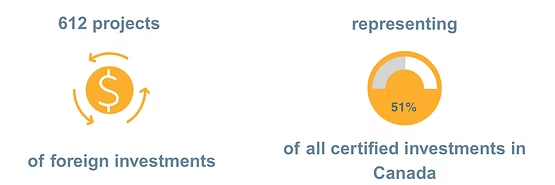
Ontario continues to attract record-breaking foreign direct investment (FDI), with global industry leaders choosing the province for large-scale projects:
Volkswagen (Germany): In March 2023, Volkswagen announced a CAD 7 billion investment to build a battery plant in St. Thomas, Ontario — one of the largest European industrial projects in North America. By August 2025, PowerCo Canada (a Volkswagen subsidiary) awarded two major contracts for the plant’s construction.
AstraZeneca (United Kingdom): On January 22, 2025, AstraZeneca confirmed a CAD 820 million (approx. £460 million) investment to expand its R&D center in Toronto (Mississauga). The project will create over 700 highly skilled jobs in life sciences, support 210+ global clinical trials (notably in oncology and rare diseases), and benefit from support by the Ontario government.
Alstom (France): In 2025, Toronto’s GO Expansion project entered its active construction and modernization phase. The ONxpress consortium, including Alstom, finalized project design in 2024 and began major works. This CAD 13.5 billion program will transform regional rail service through 2030.
Ford Motor Company (United States): Between 2024–2025, Ford announced a total CAD 3 billion investment to boost production of its F-Series trucks at the Oakville, Ontario complex. The project aims to increase annual production capacity by 100,000 units starting in 2026, creating around 1,800 direct jobs.
Honda Motor Co., Ltd. (Japan): In April 2024, Honda revealed plans for a CAD 15 billion investment to build four facilities in Ontario dedicated to electric vehicles (EVs) and batteries. Once completed, the project will enable an annual production capacity of 240,000 EVs by 2028.
Ontario’s exports account for a significant share of Canada’s international trade, showcasing the province’s strong global orientation. Key export sectors include:
Ontario’s diversified export base reinforces its position as a global trading hub, connecting Canadian innovation, resources, and industry with markets around the world.
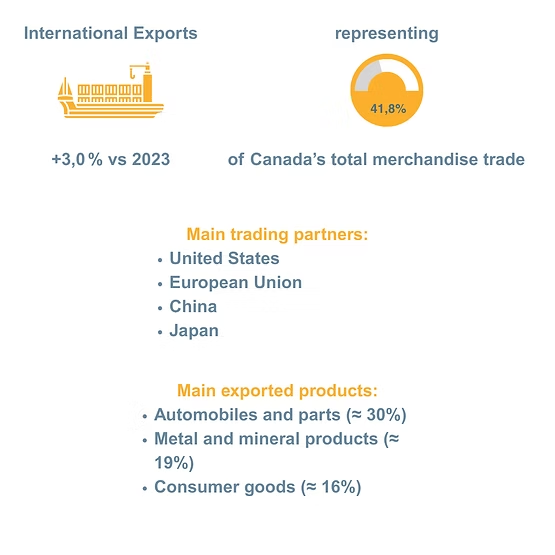
In 2024, Ontario’s international merchandise exports reached approximately CAD 259.1 billion, a 3.0% increase compared to 2023 (CAD 251.6 billion). These exports represented nearly 41.8% of Canada’s total merchandise trade, reaffirming Ontario’s position as the driving force of Canadian international trade.
The United States remains by far Ontario’s largest export market, accounting for about 80% of the province’s total exports.
In 2024, France ranked as Canada’s 10th largest trading partner, and the 3rd largest among European countries, behind Germany and Italy but ahead of Belgium and Spain.
However, despite Ontario’s economic dynamism, France’s trade presence in the province remains limited compared to other European powers such as Germany, the United Kingdom, and the Netherlands. In 2023, France accounted for only 0.3% of Ontario’s exports and 0.7% of its imports, while Germany represented 0.9% of exports and 2.6% of imports, and the Netherlands 0.4% of exports. These countries have positioned themselves as major economic partners for Ontario, both in terms of foreign direct investment (FDI) and trade volumes.
By contrast, France remains underrepresented, highlighting a largely untapped potential. Across Canadian provinces, Québec leads as the top destination for French exports (47%), followed by Ontario (35%). This presents strategic opportunities for French companies seeking to enter the Canadian market, build local partnerships, and strengthen their presence in Ontario, Canada’s economic powerhouse.
Ontario’s economy is defined by its remarkable sectoral diversification and a strong orientation toward innovation, ensuring resilience and sustainable growth.
Toronto is Canada’s leading financial hub, home to the headquarters of the country’s largest banks — the “Big Five”: Royal Bank of Canada (RBC), Toronto-Dominion Bank (TD Bank Group), Bank of Nova Scotia (Scotiabank), Bank of Montreal (BMO Financial Group), Canadian Imperial Bank of Commerce (CIBC). It also hosts major insurance companies such as Manulife Financial (HQ Toronto), Sun Life Financial, Intact Financial Corporation, and Fairfax Financial Holdings. The Toronto region employs about 210,000 people in financial services, representing nearly three-quarters of Ontario’s financial workforce. This sector plays a central role in the Canadian financial system and contributes significantly to Ontario’s GDP.
Ontario remains the manufacturing powerhouse of Canada, particularly in automotive, aerospace, and consumer goods. Notable companies include: Magna International, Linamar Corporation, General Motors Canada, Ford Motor Company of Canada, Stellantis Canada, Toyota Motor Manufacturing Canada, Bombardier, and Pratt & Whitney Canada.
Backed by a dynamic ecosystem around Toronto and Waterloo, Ontario’s tech sector is experiencing rapid growth. Toronto is recognized as a major North American tech hub, hosting a dense network of startups, scaleups, and established firms in ICT, cybersecurity, AI, and fintech. Toronto–Waterloo Corridor Highlights: Shopify (large office in Toronto), OpenText (HQ Waterloo – global leader in content management), BlackBerry (Waterloo – cybersecurity & embedded software), Communitech (incubator, Waterloo), Lightspeed (Toronto presence, HQ in Montreal), Wealthsimple (fintech, Toronto), Ada Support (AI conversational platform, Toronto). Global tech giants further strengthen Ontario’s ecosystem, including Google Canada (Toronto, Waterloo), Microsoft Canada (Toronto), and IBM Canada (Markham).
Ontario is one of Canada’s top mining producers, with a mineral production value of CAD 15.7 billion in 2023, representing 26% of national output. The sector employs over 77,000 people, particularly in Northern Ontario, and positions the province as a global leader in mining. Ontario is a top producer of platinum group metals, nickel, cobalt, gold, copper, zinc, and silver. The Toronto Stock Exchange (TSX) is the world’s leading exchange for mining companies, reinforcing Ontario’s global role in resource financing. Key players include: Vale Canada (nickel, Sudbury), Glencore Canada (zinc, copper, Sudbury), Agnico Eagle Mines Limited (gold, HQ Toronto), Barrick Gold Corporation (HQ Toronto, one of the world’s largest gold producers), Kinross Gold Corporation (Toronto), Franco-Nevada Corporation (Toronto – mining royalties), and First Quantum Minerals (Toronto).
Ontario also has a significant forestry industry, supported by government programs promoting sustainability and competitiveness.
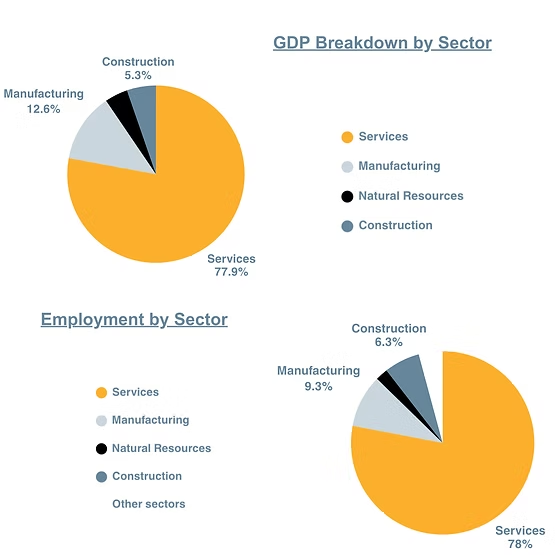
Other strong sectors in this province include :
Although representing a smaller share of GDP (around 3% of Ontario’s GDP), this sector remains important for the rural economy and Canadian agricultural exports, with sustained growth prospects. Some major names: Maple Leaf Foods (food processing, Toronto), Cargill Canada (agri-food processing), Grain Farmers of Ontario (largest grain producers’ organization in Canada), Gay Lea Foods (dairy cooperative), Burnbrae Farms (eggs, major producer in Ontario).
Rapidly expanding, supported by significant R&D investments and a dynamic ecosystem in medical device manufacturing, pharmaceuticals, and bioproduction. Some names: Apotex Inc. (generic pharmaceuticals, Toronto), Sanofi Canada (vaccines and pharmaceuticals, Toronto), Hoffmann-La Roche Ltd. (Mississauga), Bayer Canada (Mississauga), Gilead Sciences Canada (Mississauga).
A stable and major employer, encompassing health (with strong investments, steady growth, and significant needs in human and material resources, making it a core strength of the provincial economy), education, and government services.
With an anticipated need for around 1.5 million new homes by 2031 and an infrastructure investment plan of CAD 150 billion over 10 years, these sectors offer major opportunities. Large-scale projects are also underway in Ontario. For more details, we invite you to read our dedicated article on the engineering sector and major infrastructure projects in Canada.
International investors face several challenges, including:
Despite these challenges, Ontario offers decisive advantages that make it a top choice:
These assets make Ontario a strategic platform for foreign companies aiming to successfully expand into Canadian and North American markets.
Ontario continues to stand out as Canada’s leading economic powerhouse, thanks to its dynamic human capital, flourishing innovation ecosystem, and strategic infrastructure.

This relocation reflects our commitment to being closer to Ontario’s economic players, in a province that stands as a strategic hub for trade, innovation, and investment. From our Toronto office, we support French and international companies in their projects related to market entry, growth, and partnerships in Ontario.
Our local presence allows us to strengthen our role as a facilitator, expand our network, and provide tailored support to companies seeking to seize the many opportunities the province has to offer.
Feel free to contact us today to learn how we can help you capture Ontario’s opportunities and accelerate your growth in Canada.


For a foreign company looking to grow its business in Canada, building a local presence ...

The Canadian cosmetics market consistently attracts the attention of European brands looking to expand internationally. ...

Alcohol trade regulation in Canada falls under provincial jurisdiction. Each province controls importation, distribution and, ...

SMEs and Mid-Sized Companies: Have You Considered External Growth to Accelerate Your Expansion in Canada ...

Canada is Opening the Door to Strategic Investment in Energy, Infrastructure and Critical Resources Thanks ...

In today’s global landscape, where medical innovation and access to strategic markets are critical challenges, ...